Portable mini lab and 275 g micro UAV:STimes 12.11.2005
Device can do work of bio lab in detecting deadly viruses
and bacteria in the field
A HANDHELD device that could replace an entire laboratory's work in
detecting
deadly viruses and bacteria has secured a coveted defence
technology prize for scientist Eric Yap.
The annual Defence Technology Prize Individual Award recognises the
person who has made the most impact in the area of defence research
and weapons development here.
Dr Yap's work, which involved 11 years of research and has led to
two
patents in the United States, could revolutionise the way the
Singapore Armed
Forces (SAF) medical units test for biohazards in the field.
The 'lab on a chip' is still being perfected, but results of
initial trials
indicate that a handheld device could do work that now requires
bulky boxes of fragile testing equipment.
The device uses special test solutions to assess samples of
suspected
biohazards, which are placed on a glass slide.
The slide, about the size of a postage stamp, is inserted into a
handheld
reader and scanned electronically to help the researcher find out
what the
sample is.
It can detect the presence of biohazards that SAF personnel could
encounter
in training or combat situations, including the mosquito-borne
dengue virus, or
the soil disease melioidosis, which is present in soil bacteria and
can cause
potentially lethal blood infections.
Last year, 98 people caught melioidosis and 60 people have been
infected so far this year, according to the Health Ministry. Dr
Yap, 41, is head of the
population genetics laboratory at the Defence Medical and
Environmental
Research Institute, a facility that comes under DSO National
Laboratories,
Singapore's biggest defence research and development lab.
Tests on the device are continuing in the lab, located next to the
National
University Hospital, to broaden the computer database to include
information on as many types of viruses as possible.
'We can detect what we know, but how do you detect what you don't
know, like new viruses or bacteria,' said Dr Yap. 'We don't have
samples of everything from everywhere.'
At yesterday's award ceremony, Defence Minister Teo Chee Hean also
gave out four team awards to projects advancing the performance of
air defence radars and technology that helps SAF commanders lead
and control their units during operations.
Mr Teo added that apart from home-grown innovations, Singapore has
also been able to leverage on international technology partners to
'multiply what we can do on our own'.
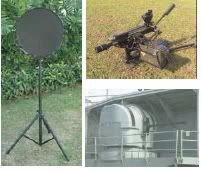
For instance, a 275g air surveillance vehicle called the
Wasp
was tested here two weeks ago by the Defence Technology
and Research Agency(POster note:I think it should be DSTA) with the
United States The Defense Advanced Research Projects
Agency (DARPA)
The Wasp, which carries two cameras, is one of 19 projects
that the US agency is working on with scientists here.
[email protected]